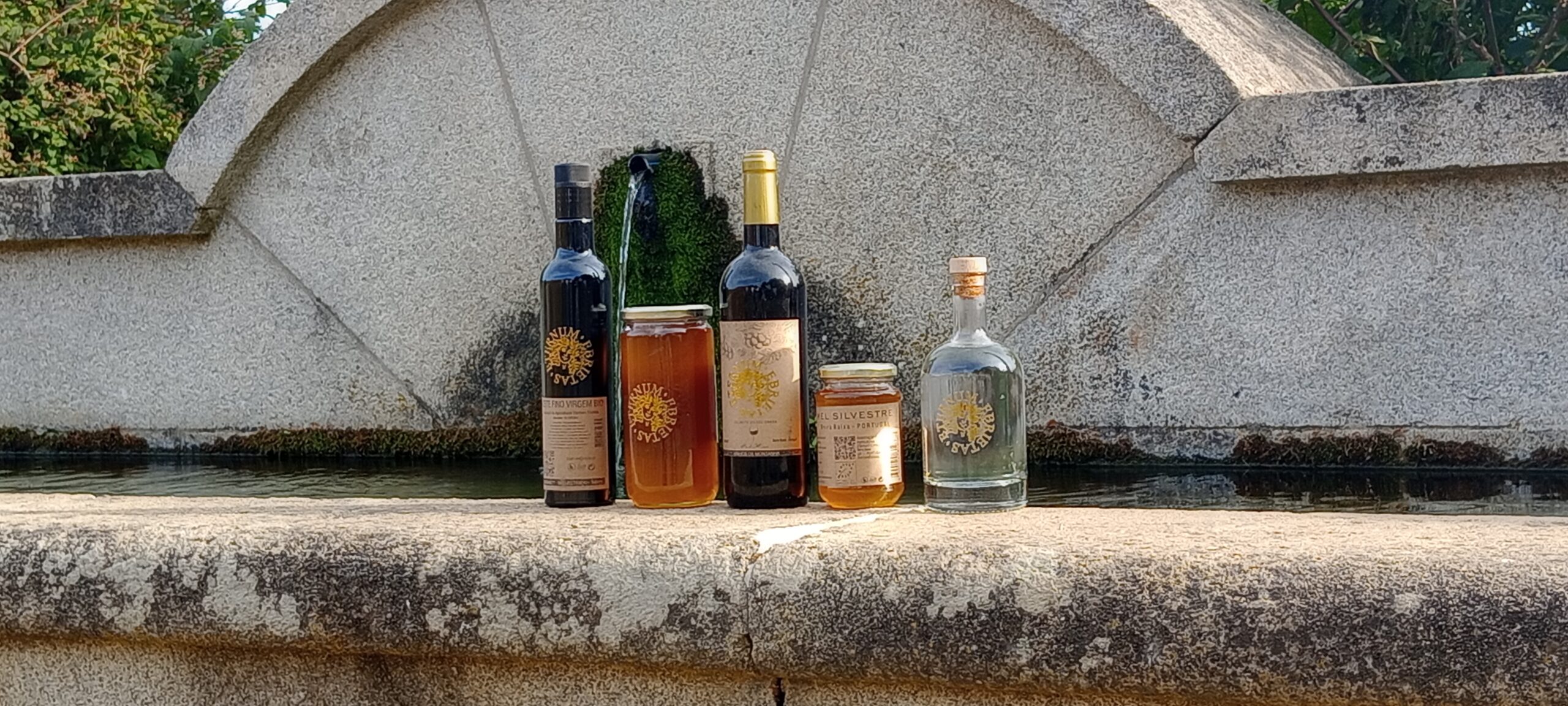
Eternum Ebrietas’ traditional raw mountain honey from Beira Baixa Portugal is crafted from a variety of massive autochthonous (native) mountain flowers giving it exquisite properties prized in both taste and health value.[1]
Autochthonous Mountain Flowers
The unique flora of the Beira Baixa mountains includes wild lavender (Lavandula stoechas), rosemary, heathers (Erica, Calluna vulgaris), and numerous endemic wildflowers native to the region. These flowers thrive in mountainous, minimally disturbed habitats, providing complex nectar sources that contribute to the honey’s rich profile and bioactive quality.[2][3][4]

Exquisite Properties of Raw Honey
-Nutritional and Therapeutic Qualities:The honey is produced using traditional, non-industrial methods and is not pasteurized; this preserves natural enzymes, vitamins, minerals (notably potassium, calcium, and magnesium), and bioactive compounds beneficial for health.[3][1]
– Antioxidants and Complexity: High floral diversity means the honey contains elevated levels of antioxidants, polyphenols,and enzymes. Naturaly sweet and valued in traditional medicine for immune-boosting and nourishing properties.[3]
– Intense Aroma and Flavor: The rich intense flavor and aroma of the honey reflect both the native flora of the mountains and the artisanal methods. Is often described as floral, herbal, and earthy.[2]

Traditional Raw Honey – Eternum Ebrietas Mountain Honey
– Certified Organic: The honey is 100% natural unpasteurized. Preservatives free and bottled in airtight containers to maintain freshness.
– Artisanal and Local: Beekeepers follow environmentally respectful practices preserving the ecological balance of the native mountain ecosystem.[1]
[1](https://eternumebrietas.org/pt/produto/mel-biologico-da-montanha/)
[2](https://en.serramel.com/products/special-packaging/wild-lavender-honey-from-portugal-ceramic-jar/)
[3](https://pmc.ncbi.nlm.nih.gov/articles/PMC5502051/)
[4](https://alegreme.pt/en/products/mel-de-rosmaninho-500g)
[5](https://invasoras.pt/en/invasive-plant/oenothera-glazioviana-0)
[6](https://www.homekeyportugal.com/en/detail/wild-plants-beira-baixa-edible-plants-medicinal-herbs-foraging-tips-culinary-uses-wild-plants/82167)
[7](https://www.wildlifeportugal.pt/en/wildflowers/)
[8](https://pigletinportugal.com/wild-flowers-in-portugal/)
[9](https://www.jagarquiteturapaisagista.com/en/single-post/21-native-trees-in-portugal)
[10](https://www.aldeiasdoxisto.pt/en/villages/zezere/pedrogao-pequeno/)
[11](https://4fund.com/ca/x3n7cd)
[12](https://www.blog.herdadedamatinha.com/b/en/the-autochthonous-forest-of-the-alentejo-coast/)
[13](https://4fund.com/gl/x3n7cd)
[14](https://portugalwildlife.com/Flowers.html)
[15](https://eternumebrietas.org/beira-baixa-mountain-honey/)
[16](https://x.com/@EternumEbrietas)
[17](https://www.cim-altominho.pt/fotos/editor2/cimaltominho/gca/livroflorestascim_br.pdf)
[18](https://rewilding-portugal.com/greater-coa-valley/wild-coa-network/local-products/)
[19](https://www.tiktok.com/@eternum_ebrietas/video/7455722152990346518)
[20](https://www.sciencedirect.com/science/article/abs/pii/S0963996922004197)