></p>
vc
_column co
lumn_</p
>
<p&gt;padding=”no-extra
-padding” column_&am
p;lt;/p
></p>
<p>padding
<p>_tablet=”i</p>
<p>nherit” column_padding_phone=”inherit” column_padding_position
=”all” column_element_direction_de
<p&gt;sktop=”default” column_
element_spacing=”default” desktop_text_
</p>
al
ignment=”default” tablet_text_alignment=</p>
“default” phone_text_alignment=”default” backgrou</p><
/p>
nd_color_opacity=”1″ background_hover_color_opacity=”1″ column_backdrop_filter=”none” column_shadow=
“none” column_border_radius=”none” column_link_target=”_self” colum
n_position=”default” gradient_directi
on=”left_to_right” overlay_strength=”0.3″ width=”1/1″ tablet_width_inherit=”default” animation_type=”default”
bg_image_animation=”none” border_type=”simple” column_border_width=”none” column_border_style=”solid”]
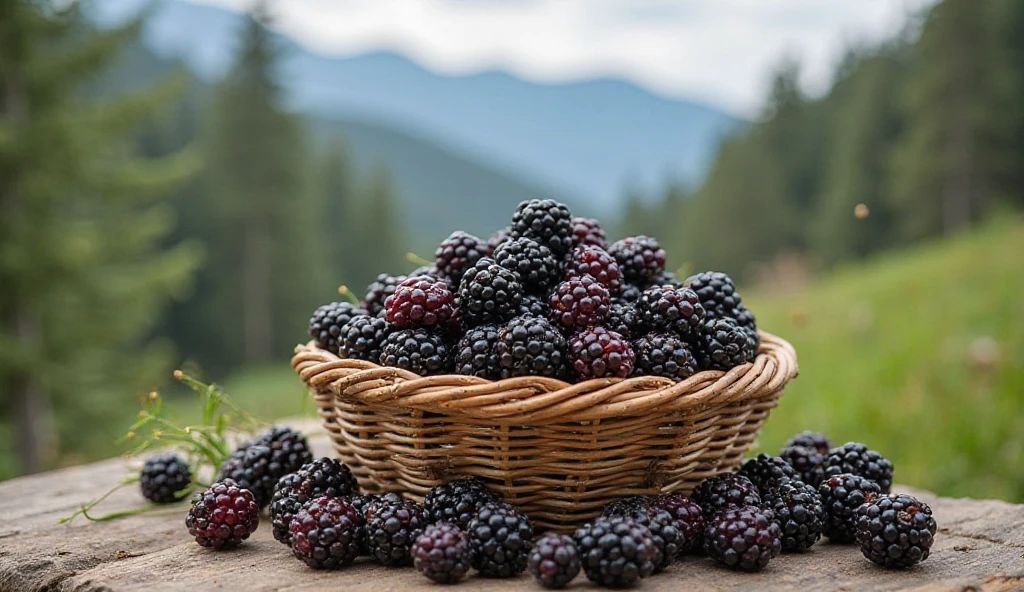
The wild blackberries of the Beira-Baixa region, Portugal, are characteristic fruits of shrubs of the Rubus genus, which grow in temperate zones and are harvested in th
e summer. These blackberries have a richness of flavours resulting from the balanced relationship between sugars and acids, which gives them a sweet flavour with a slightly spicy note, much appreciated in sensory analyses carried out by panels of tasters, with the Rubus ulmifolius species standing out for having the best flavour evaluation.
Properties of Wild Blackberries from Beira-Baixa
Nutritional composition:
Wild blackberries have a moisture content of between 84.9% and 87.9%, proteins of between 1.2% and 1.4%, fat of between 0.3% and 0.7%, ash of between 0.4% and 0.7% and carbohydrates of between 9.9% and 12.4%. Soluble solids vary between 10.4 and 14.1º Brix, and acidity between 4.4% and 13.7%, depending on the year and species.
Bioactive compounds:
They present significant levels of total phenolic compounds (150.92 to 295.05 mg of gallic acid equivalents per gram) and anthocyanins (0.19 to 31.42 mg/g), which confer antioxidant properties to the fruit. The antioxidant potential measured by the FRAP method varies between 509.92 and 889.76 μmol/g, with some cultivars standing out for their greater antioxidant capacity.
Vitamins and minerals:
They are rich in vitamins A, B, C, E and K, and minerals such as potassium, magnesium, iron and manganese.
Health Benefits
Antioxidant and anti-inflammatory action:
Blackberries contain antioxidant compounds, such as anthocyanins, flavonoids and ellagic acid, which help protect cells from premature aging, preventing the formation of free radicals and contributing to the prevention of chronic diseases, including some types of cancer and cardiovascular diseases.
Strengthening the immune system:
The high concentration of vitamin C helps to strengthen immunity, increasing resistance to infections and inflammation.
Cardiovascular health:
Eating blackberries helps regulate blood pressure and reduce cholesterol, thanks to the presence of potassium, magnesium, resveratrol and healthy fats (mono and polyunsaturated). These components help prevent heart attacks and strokes, promoting healthy blood vessels.
Bone health:
The vitamin K, calcium and iron present in blackberries help regenerate and strengthen bone tissue, and are important for preventing osteoporosis and maintaining healthy bones in adults and the elderly.
Weight control and digestive health:
Because they are rich in fiber and low in calories, blackberries help regulate intestinal transit, promote a feeling of fullness and aid in weight loss.
Vision protection:
The presence of zeaxanthin, an antioxidant, helps protect the retina and prevent eye diseases such as cataracts.
Liver protection:
Flavonoids in blackberries have hepatoprotective action, helping liver health.
Rich in Flavors
The wild blackberries of Beira-Baixa have a characteristic flavor that results from the harmonious relationship between sugars and organic acids, with an acidity that varies according to the species and the year of harvest. The flavor is described as sweet and spicy, with a dark color and a not very intense shine, typical of wild blackberries. Some species, such as Rubus brigantinus, are particularly appreciated for their flavor that is more familiar to consumers.
In short, wild blackberries from Beira-Baixa are nutritious fruits, rich in antioxidants, vitamins and minerals, with proven benefits for cardiovascular, immune, bone, digestive and visual health, in addition to presenting a wealth of flavors that make them appreciated both naturally and in various culinary preparations.