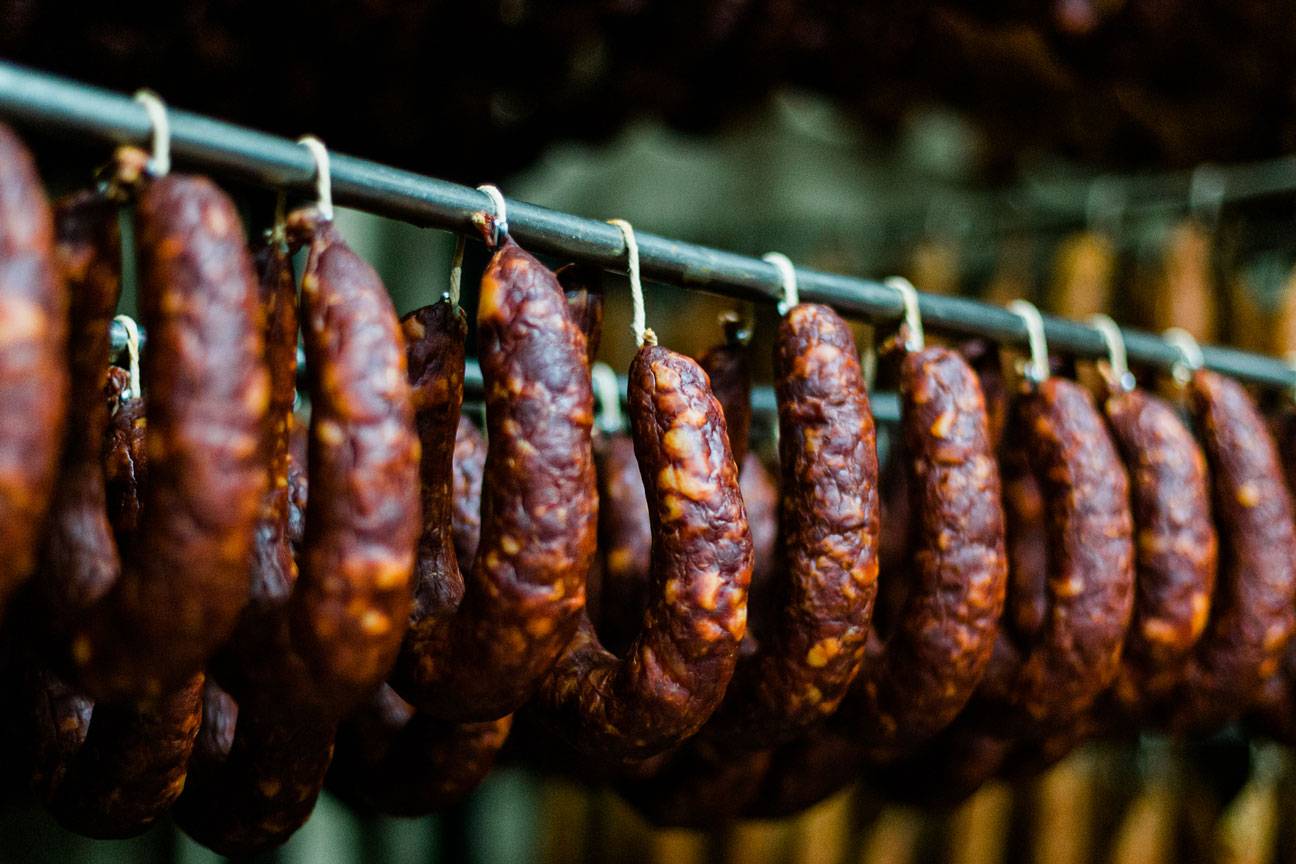
The smoked sausages and dried meats from Beira Baixa are an essential part of the gastronomy and culture of this region of Portugal. Their origin, tradition and variety reflect the rural heritage and the methods of food preservation developed over the centuries.
Origin and Tradition
The sausages of Beira Baixa have deep roots in the rural economy, where pig farming was essential for the families’ livelihood. The day of the pig slaughter was a community celebration, in which men and women shared tasks: the men took care of the butchering and salting, while the women prepared the sausages, passing on the secrets from generation to generation. Smoking or preserving them in olive oil ensured the products’ durability, essential for facing the harsh winter months.
Types of Sausages
The sausages of Beira Baixa include a wide variety, based on pork or lamb:
Pork:
Chouriços and chouriças: Made with lean meat, seasoned with garlic, salt, spices and smoked with wood (such as holm oak).
Farinheiras: Softer sausages made with fat, flour and seasonings.
Morcelas: Prepared with pig’s blood, rice or bread, and seasonings such as garlic and pepper.
Plangaio: A sausage specific to the region made with intermingled meat.
Bone-in sausage: A less common sausage that uses specific parts of the pig.
Lamb:
Maranhos: Made with goat or lamb meat, rice, mint and white wine, wrapped in the animal’s stomach. They are eaten fresh.
Borrelhões: Another lamb-based specialty.
Names and Designations
The names of sausages vary slightly depending on the location within Beira Baixa. Some of the best-known include:
Chouriço da Beira Baixa: Smoked with holm oak wood, it has a characteristic reddish colour.
Morcela da Beira Baixa.
Maranho de Proença-a-Nova: An emblematic dish of the region.
Traditional Methods
The sausages are traditionally cured in smokehouses fuelled by holm oak wood, which gives them a unique flavour. Other methods include preserving them in olive oil or eating them immediately in the case of fresh sausages such as maranhos.
Cultural Importance
In addition to their gastronomic value, these products are a symbol of the cultural identity of Beira Baixa. Sausages are not only part of traditional meals but are also frequently used in typical dishes such as stews or regional soups.
The richness of Beira Baixa sausages lies in the combination of ancestral techniques, local ingredients and the artisanal care that preserves authentic and unique flavours.